
Reduce Microplastics in Your Restaurant: Sustainable Tableware Solutions
Written by Nicole Braganza
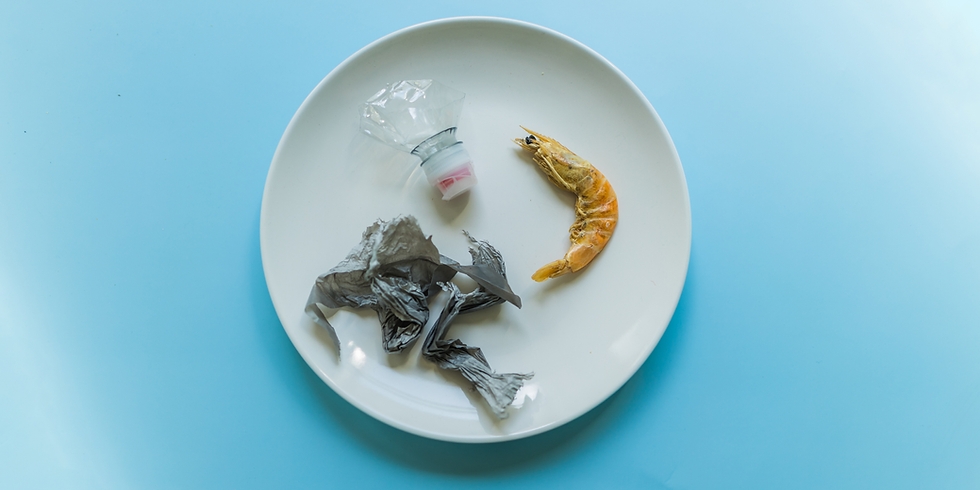
If you're in the food business, you're passionate about what you serve your customers. But what if there's something extra on every plate that neither you nor your customers signed up for?
We’re talking about microplastics.
From farm to fork, food journeys through a gauntlet of plastic. Storage containers, packaging films, cooking utensils; each contact point introduces microscopic plastic particles into what we serve. These tiny fragments of plastic, typically 5 mm or smaller—about the size of a pencil eraser. never fully biodegrade. They linger in the environment indefinitely.
While you meticulously source ingredients and perfect recipes, is your restaurant unknowingly serving a side of microplastics with every meal? Recent 2025 data from the Global Food Safety Initiative reveals alarming findings: the average restaurant meal contains approximately 28 microplastic particles – significantly higher than home-cooked alternatives. These invisible invaders enter our food system through everything from plastic cutlery to disposable serving plates.
As food professionals, our responsibility extends beyond flavor and presentation to fundamental safety. The choices we make, from kitchen equipment to takeout containers, directly impact not just our customers' dining experience, but their long-term health.
The question remains: How can we change what’s in our control to offer the new discerning customer a food experience that doesn’t compromise their health?
Here’s the good news: by making smarter choices about the products you use every day, your business can drastically cut microplastics and lead the way on sustainability.
Which products contain microplastics?

In the food industry, the biggest culprits of microplastics come from plastic packing. While disposable plastics may seem innocent, when they come into contact with food, there's a two-way transfer between the packaging and its contents. This interaction can alter the nutritional quality of the food and even affect its safety for consumption.
This is especially important for restaurants, cafés, and food trucks using plastic containers for storage, hot foods, or takeaway, situations where heat, time, and friction speed up the transfer.
Common examples include:
Takeaway cups and lids – Even paper coffee cups usually have a plastic lining that can break down when exposed to hot beverages.
Plastic containers and utensils – These degrade through repeated use, heat, and friction, releasing microplastic particles into food.
What may seem like an innocent convenience can end up on your customers’ plates—literally. It’s enough to make you think twice about using plastic as a “seasoning.”
Related products: Compostable Cups & Lids, Eco-friendly To-Go Containers
When did microplastics become a problem?
Microplastics have gradually emerged as a major environmental concern over the past two decades. The term “microplastics” was first coined in 2004 by marine biologist Richard Thompson and colleagues in a landmark paper that identified tiny plastic fragments in marine sediments and water columns.
By 2015-2020, scientific concern intensified with discoveries of microplastics in drinking water, air, food (especially seafood), and even human tissues. In the oceans alone, there is an annual sum (globally) of 1.5 million tons of microplastics, which is “the equivalent of every human throwing away a plastic [bag’s] worth of microplastics every week”.
The problem is that once these plastics break down, they don’t really go away. Microplastics are far more difficult to remove from the environment than larger pieces of plastic and can take hundreds of years to degrade, all while harming ecosystems and entering our food chain.
One of the biggest culprits? Single-use plastics, especially in the food industry. Packaging, utensils, straws, cups, and containers used for takeout or delivery are among the top contributors to microplastic pollution.
Switching to compostable alternatives can make a real difference. Compostable materials break down naturally and safely, helping reduce the long-term plastic waste that’s now infiltrating our oceans and our food. Small changes, like replacing plastic cups or utensils with compostable ones, play a part in reversing this growing problem.
How food businesses can reduce microplastics
Microplastic pollution is a serious and growing challenge, but food businesses have a real opportunity to make a difference. Even small changes in your operations, like swapping a few plastic items for compostable alternatives, can help reduce pollution and toxins that come from using plastic.
For example, if your restaurant relies on low-cost takeout containers, switching to plant-based to-go containers can significantly reduce your plastic use. With a few practical changes and a desire to reduce plastic waste, food service businesses can be leaders in sustainability and appeal to eco-conscious customers.
6 practical ways to avoid microplastics in your food business
Develop a staff training program: Making better choices starts with getting everyone on board. Educate all staff on microplastic sources and reduction strategies and establish clear protocols for handling, storing, and preparing food to minimize plastic contact.
Switch to compostable service products: Takeaway cups, bowls, and containers often include a polyethylene plastic lining (approximately 5% plastic by weight) that makes them waterproof. This combination of materials creates a recycling challenge - these cups are considered "mixed materials" and cannot be processed through most standard curbside recycling programs. The solution? Products like these compostable insulated hot cups.
Upgrade food processing equipment: Replace plastic components in food processing machinery with stainless steel or food-grade silicone where possible. Implement regular inspection protocols to identify and replace worn plastic parts before they shed particles.
Engage with certification programs: Pursue relevant sustainability certifications, like BPI Certified, demonstrates your commitment to reducing plastic. It also gives customers confidence that your business prioritizes environmental responsibility.
Handle trash responsibly: Food service operations generate significant waste. For example, a food truck can produce 100–150 pounds (45–68 kg) of waste per day. Using compostable trash bags allows you to manage waste sustainably and reduce plastic pollution. Even better, composting food waste turns scraps and leftovers into nutrient-rich soil instead of sending them to a landfill, further minimizing your environmental impact. Learn more about how your restaurant can implement composting in our guide to restaurant composting.
Promote your efforts: Share your microplastic reduction practices with customers. Highlighting compostable products, reusable options, and eco-friendly practices helps attract environmentally conscious diners while positioning your business as a sustainability leader in the industry.
Influencing change
Restaurants and food businesses have a unique opportunity to reduce microplastic pollution and lead the way toward a more sustainable future. Every switch to compostable, biodegradable, or plastic-free products in your kitchen and service areas helps reduce your plastic footprint and sets a standard for the industry.
By adopting these sustainable alternatives, your business not only minimizes its own contribution to microplastics but also influences customers, peers, and suppliers to make better choices. Every compostable cup, bowl, utensil, or packaging swap is a step toward systemic change — showing that practical, eco-friendly solutions are both feasible and beneficial for business operations.
Take the first step today, review your menu and service items, identify the plastics you use most, and start switching to sustainable alternatives.
Visit Plastic Detox for sustainable food service supplies.
References
Ziani, Khaled, et al. “Microplastics: A Real Global Threat for Environment and Food Safety: A State of the Art Review.” Nutrients, vol. 15, no. 3, 2023, p. 617. doi:10.3390/nu15030617.
University of Plymouth. “Are Microplastics a Big Problem?” University of Plymouth – Discover, https://www.plymouth.ac.uk/discover/are-microplastics-a-big-problem. Accessed 20 Oct. 2025.
Boucher, Julien, and Damien Friot. Primary Microplastics in the Oceans: A Global Evaluation of Sources. International Union for Conservation of Nature (IUCN), 2017. doi:10.2305/IUCN.CH.2017.01.en.


Comments